
Refuture Africa / Online preview / Version 1.1
Place and Potential Map
Use before choosing an intervention or entering a new place. Bring local knowledge, existing strengths and different perspectives into the decision.
Read all 5 pages below, including the guide, worksheets and examples. This preview is read-only. To complete the worksheets, download the fillable PDF with your name and email.
On a small screen, open a full-size page to zoom, or expand its text view. The PDFs are not fully tagged for screen readers. Use the online text view if it works better with your assistive technology.
Worked examples use a fictional solar irrigation service. Assumptions, proposals and simulated results are labelled in the tools.
Facilitator guide: prepare and run a session
Prepare
For communities, enterprise teams and institutions exploring a place-based opportunity. Allow 60-90 min + local enquiry. Invite people affected by the decision and people who can explain how delivery, money and decision rights work. Agree consent, attribution and how disagreements will be recorded.
Bring relevant evidence with sources and dates, a printed worksheet or a PDF editor, and a way to record unresolved questions. Read the teaching example beforehand; its invented figures are not benchmarks.
Run the session
Agree the place and the decision
Let local participants name the place and explain what connects it. State the decision and a useful boundary; note the relationships and histories that extend beyond it.
Listen through four lenses
Explore people and power; strengths and knowledge; living systems; history and change. Record who has said what, when and with what permission.
Map relationships and compare possibilities
Connect the sketch with labelled relationships. Compare at least two opportunities, including a lower-investment or no-new-infrastructure option. Examine benefits, burdens and displacement.
Choose the next enquiry together
Mark K = known, A = assumed or ? = to explore; add sources and dates. Agree whose missing perspective could change the choice, an enquiry owner and a review point.
Check the quality
Look for the distinctive potential of people and living systems together. A neat boundary is a working aid, not a complete hydrological, social or economic system. Participation should influence the decision; attendance alone is not consent or shared authority.
Separate what is known, assumed and still to explore. Invite a different view before agreeing the next action. A proposed commitment stays a proposal until the responsible people confirm it.
Close and follow through
Read back the decision, evidence gaps, owner, resources and review date. Record what would make the team pause or change course. Share the record with participants and confirm corrections.
Use the worksheet
Page 2 is an A3 landscape worksheet; page 4 shows a completed teaching example. Type brief notes or print at A3 and draw in the map area. Use PDF annotations for sketches. Save, reopen and check your entries; keep detailed evidence separately.
1 / Tool guide
Open full-size page 1 in a new tab ↗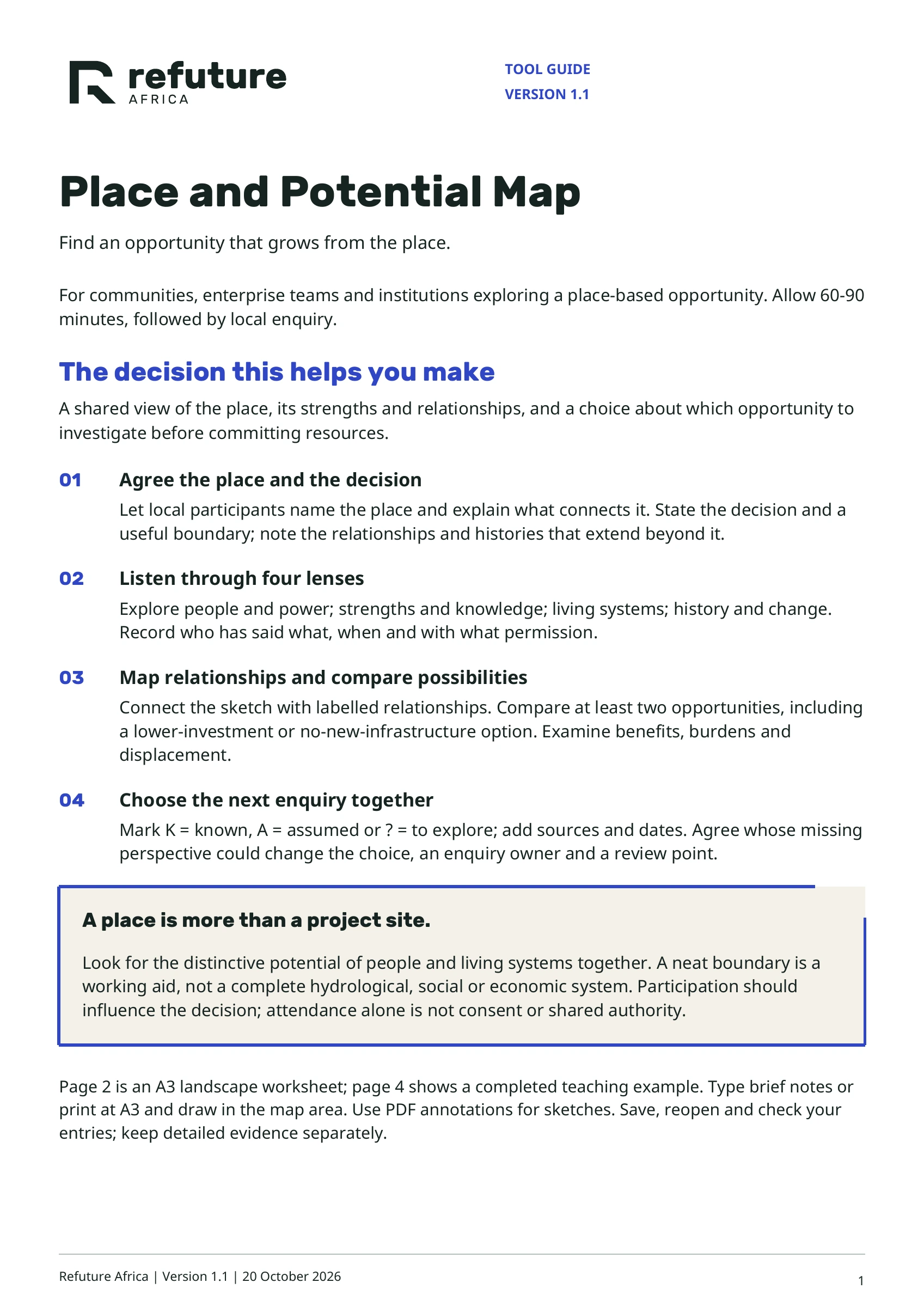
Read page 1 as text
Text follows the PDF’s reading order; use the page image to see relationships and table columns.
2 / Fillable place worksheet
Open full-size page 2 in a new tab ↗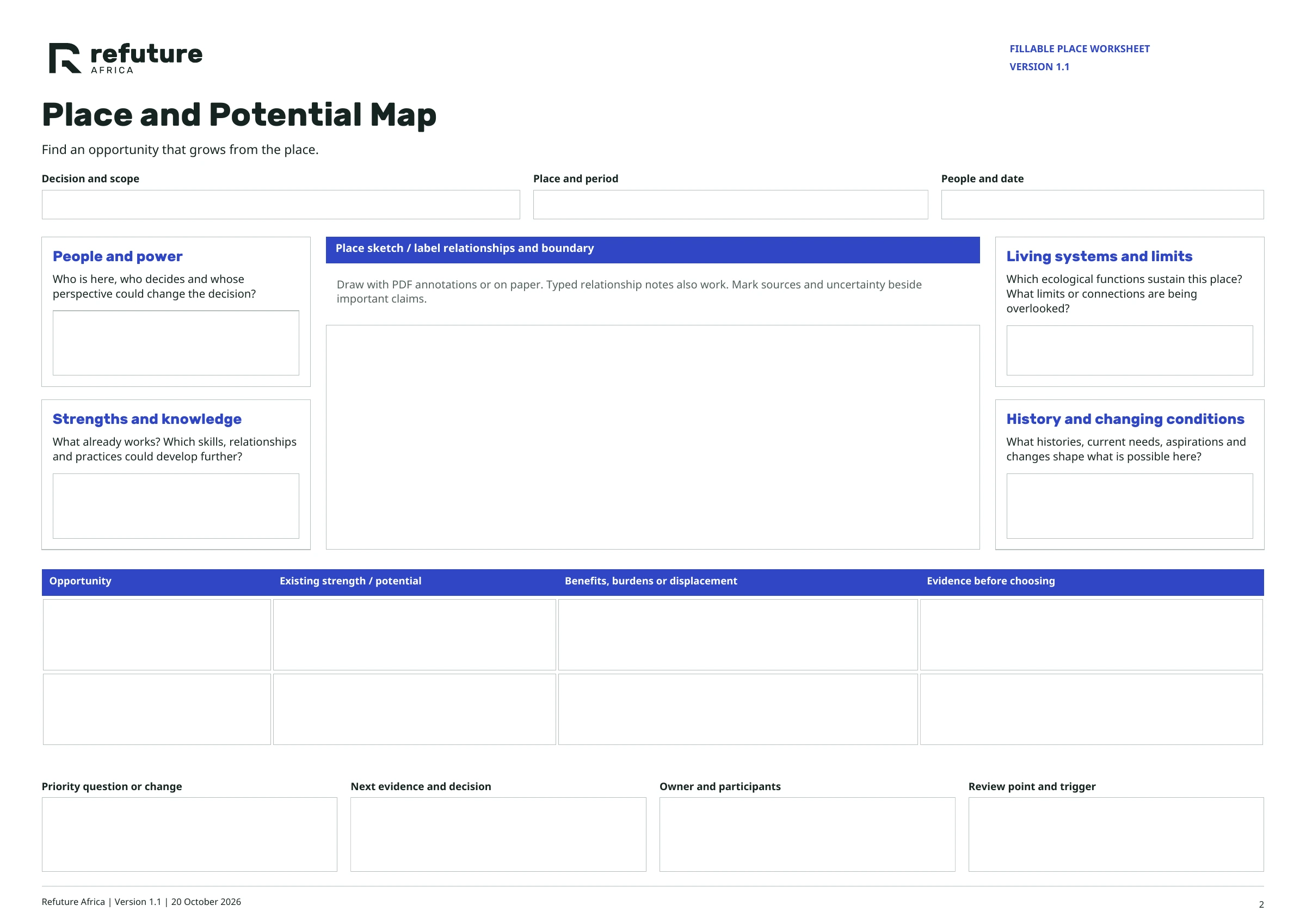
Read page 2 as text
Text follows the PDF’s reading order; use the page image to see relationships and table columns.
Worksheet entry labels
These labels identify the blank fields in this worksheet. Repeated row labels belong to separate entries.
- Decision and scope
- Place and period
- People and date
- People and power. Who is here, who decides and whose perspective could change the decision?
- Strengths and knowledge. What already works? Which skills, relationships and practices could develop further?
- Living systems and limits. Which ecological functions sustain this place? What limits or connections are being overlooked?
- History and changing conditions. What histories, current needs, aspirations and changes shape what is possible here?
- Place sketch: boundary, actors, living systems and relationships
- Opportunity, row 1
- Existing strength / potential, row 1
- Benefits, burdens or displacement, row 1
- Evidence before choosing, row 1
- Opportunity, row 2
- Existing strength / potential, row 2
- Benefits, burdens or displacement, row 2
- Evidence before choosing, row 2
- Priority question or change
- Next evidence and decision
- Owner and participants
- Review point and trigger
3 / Shared fictional teaching case
Open full-size page 3 in a new tab ↗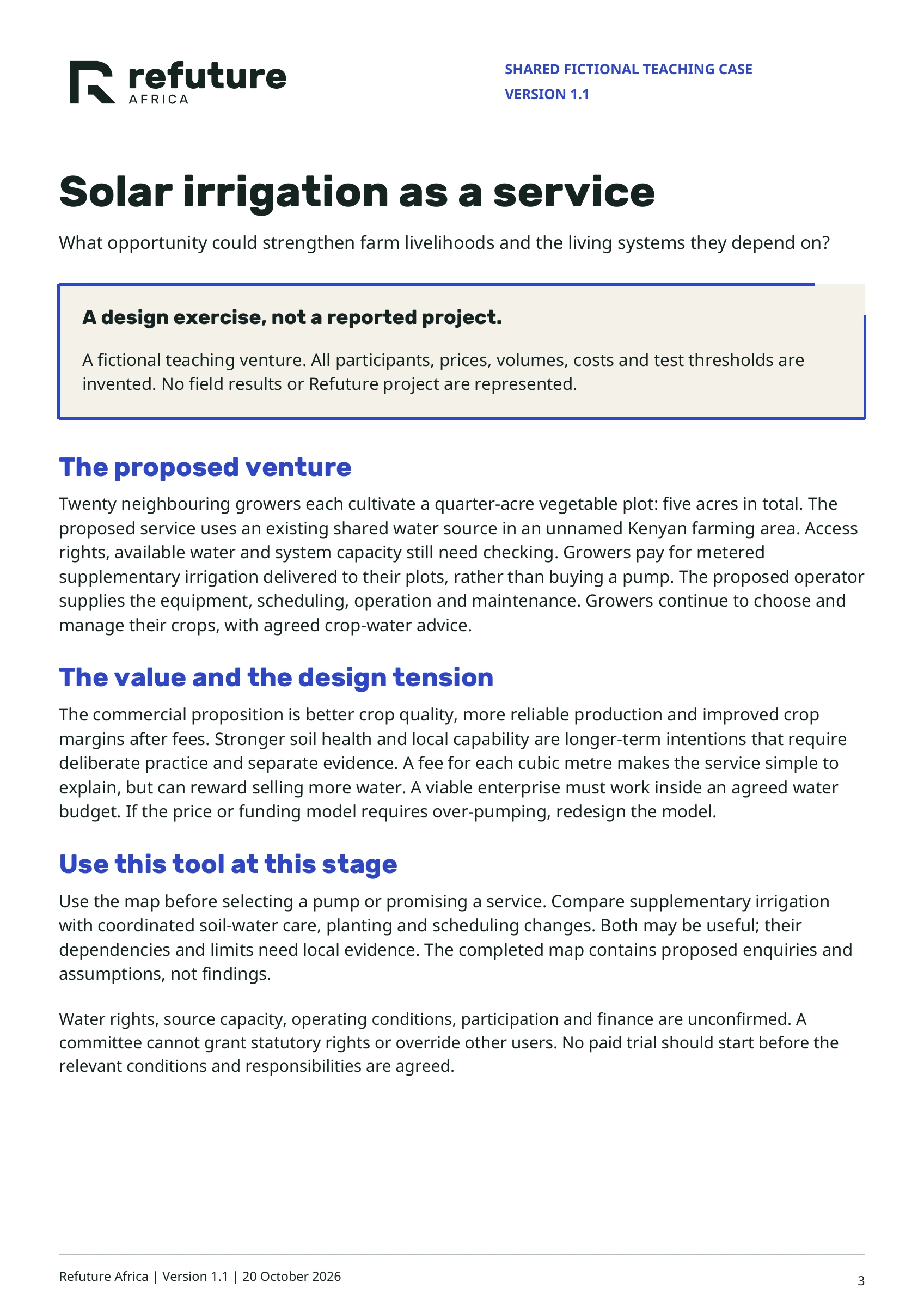
Read page 3 as text
Text follows the PDF’s reading order; use the page image to see relationships and table columns.
4 / Worked example
Open full-size page 4 in a new tab ↗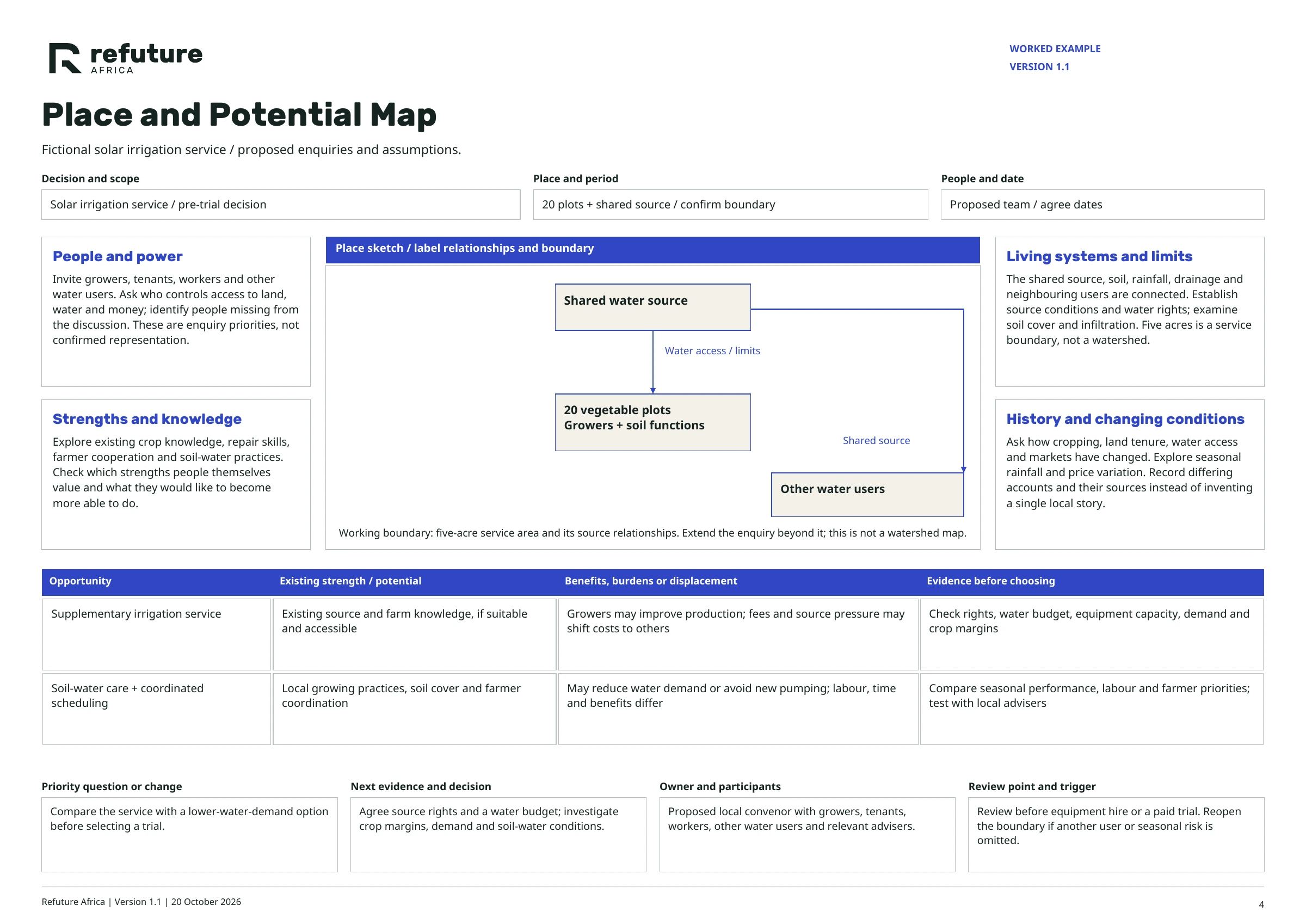
Read page 4 as text
Text follows the PDF’s reading order; use the page image to see relationships and table columns.
5 / Review, evidence and use
Open full-size page 5 in a new tab ↗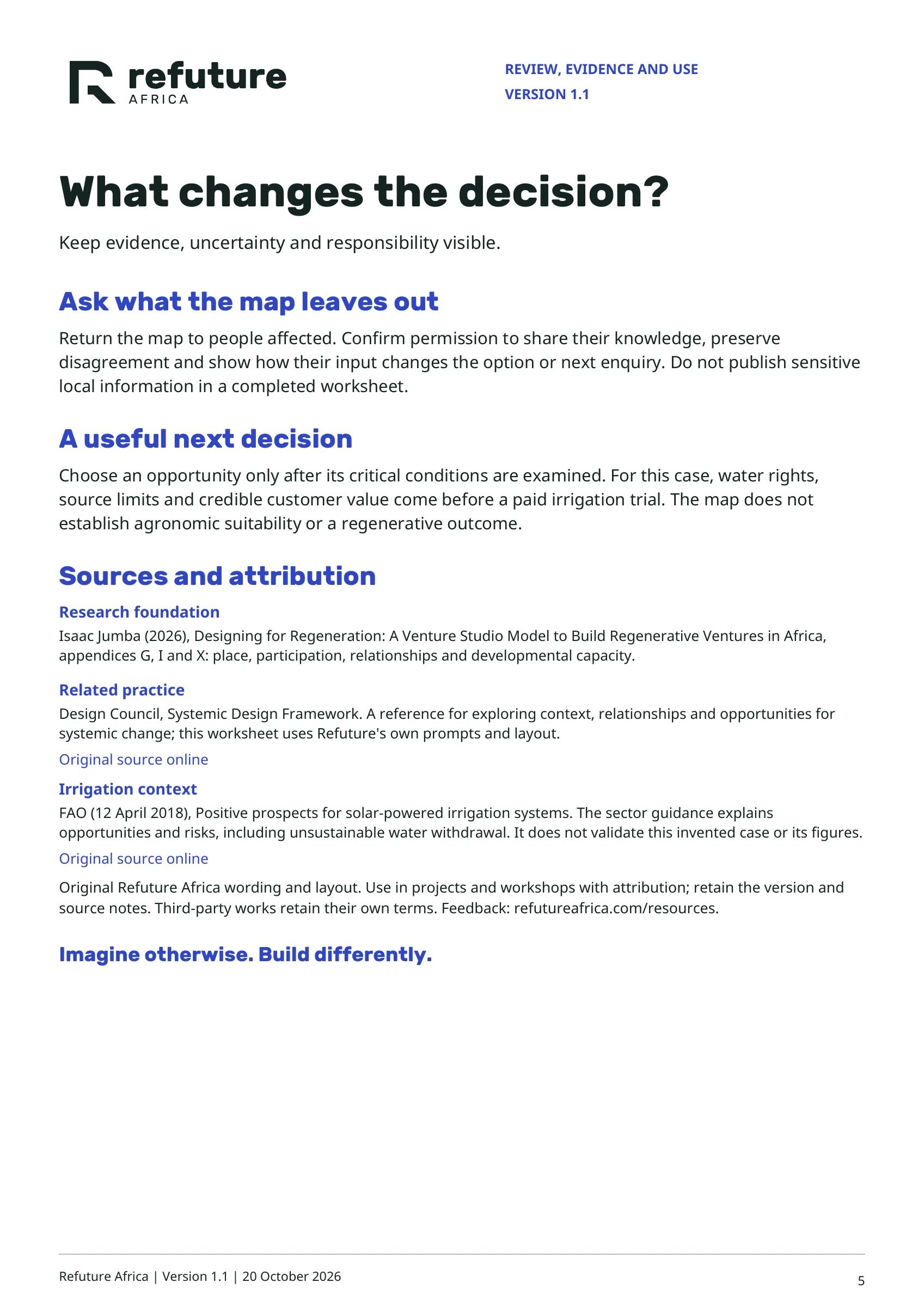
Read page 5 as text
Text follows the PDF’s reading order; use the page image to see relationships and table columns.
Ready to use it?
Download the fillable PDF to type into the worksheets or print them at the sizes shown in the guide.
Get the fillable PDF